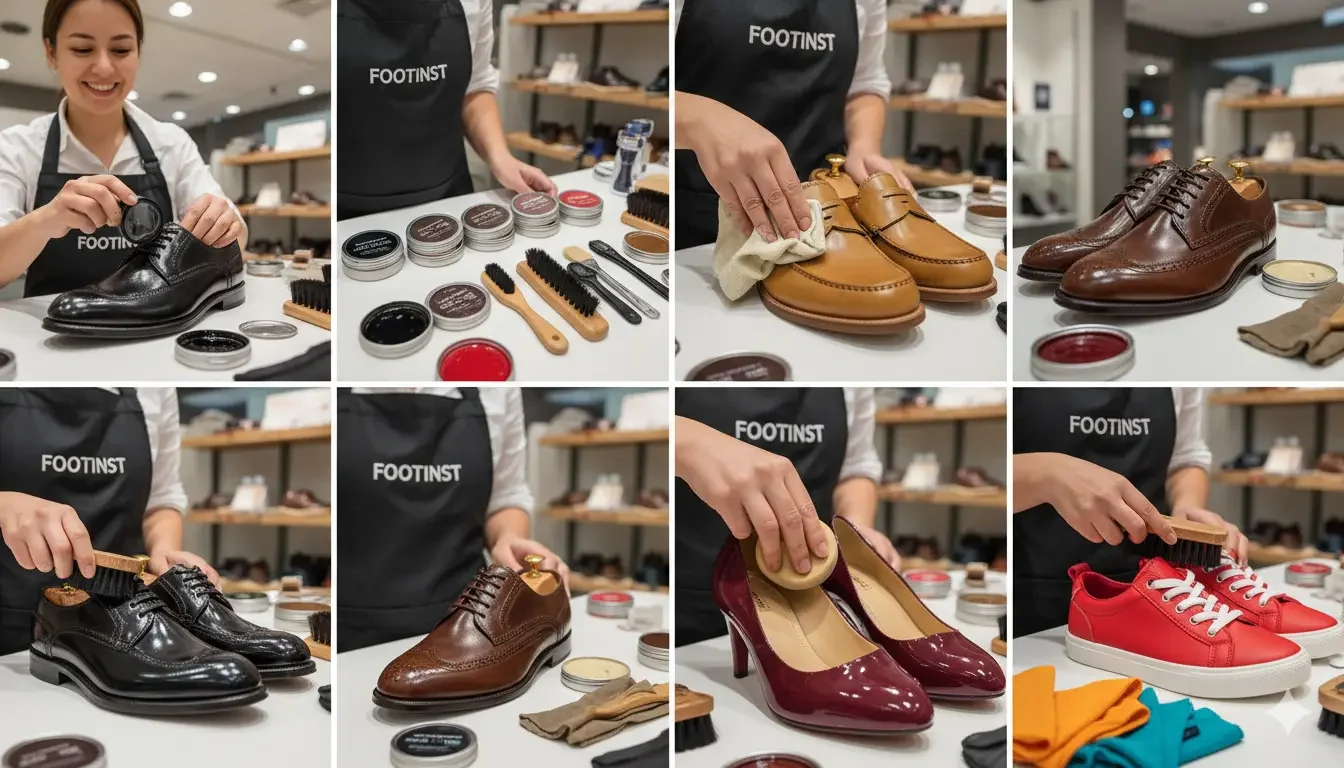
Types of Colour Shoe Polish – Seller Guide for Men & Women
Leather shoes are an investment. From my real store experience, shoes that are polished and maintained last 2–3 times longer. Many people think polish is just for shine—but it’s more than that:
- Protects leather from cracking, drying, and water damage.
- Restores the original color and hides minor scratches or scuffs.
- Enhances professional and stylish appearance.
Pro Tip: Even casual leather shoes like loafers or moccasins benefit from regular polishing. Skipping polish can make leather look faded and worn faster.
Black Shoe Polish
- Best for: Black leather formal shoes, boots, and oxfords.
- Why it works: Restores deep black color, adds shine, and covers scuffs.
- Real Store Insight: Customers in offices often complain their black shoes look dull after a few weeks. Applying the right black polish instantly refreshes the look.
Extra Tips: Use cream polish for soft finish; wax polish for glossy shine. Buff in circular motion. Apply thin layers gradually.
Common Problems: Wrong shade black looks grayish. Too much polish creates sticky, uneven surface.
Pro Tip: Keep a dedicated brush for black polish to avoid contamination with brown shoes.
Brown Shoe Polish
- Best for: Dark brown, chestnut, or medium brown leather shoes.
- Why it works: Enhances natural brown tones and covers scratches.
- Real Store Insight: Many men’s casual leather shoes are brown. Customers often mix up dark and light shades, which can make shoes look unnatural.
Extra Tips: For multi-tone brown shoes, apply gradually. For matte brown shoes, use cream polish to maintain texture.
Common Problems: Dark polish on light brown shoes looks too dark. Thick layers leave sticky finish.
Neutral / Colourless Shoe Polish
- Best for: Any colored leather, especially shoes with mixed tones.
- Why it works: Adds shine without altering original color.
- Real Store Insight: Customers buying designer or two-tone shoes prefer neutral polish—it’s safe, enhances shine, and protects without changing color.
Extra Tips: Ideal for frequent maintenance. Use soft cloth or applicator brush. Great for shoes with patterns or embossing.
Common Problems: Excessive application reduces shine. Using colored polish may alter original color.
Tan / Light Brown Shoe Polish
- Best for: Tan, camel, and light brown leather shoes.
- Why it works: Enhances warm tones, restores faded colors, and covers minor scratches.
- Real Store Insight: Customers with casual shoes or loafers often ask for tan polish, as darker polish can make light shoes look unnatural.
Extra Tips: Apply in thin, even layers. Avoid dark polish over tan shoes. Combine with leather conditioner for daily wear.
Common Problems: Uneven streaks if not applied carefully. Wrong shade leads to patchy finish.
Burgundy / Mahogany Shoe Polish
- Best for: Red-brown, oxblood, or burgundy leather shoes.
- Why it works: Enhances elegance, restores rich color, adds subtle shine.
- Real Store Insight: Popular for men’s dress shoes and women’s leather heels. Customers want polish that improves color without over-darkening.
Extra Tips: Apply gradually. Perfect for formal occasions or office use. Test small hidden area first.
Common Problems: Using black polish dulls burgundy. Thick layers may hide leather texture.
Specialty / Colored Shoe Polish
- Best for: Designer or custom-colored leather shoes (navy, grey, green, etc).
- Why it works: Preserves unique colors while protecting leather.
- Real Store Insight: Trendy shoes often need brand-specific polishes. Customers ask, “Will this polish affect my custom shoe color?”
Extra Tips: Test small area first. Use for fashion shoes, designer heels, or colored boots. Follow manufacturer guidelines.
Common Problems: Wrong shade permanently alters shoe color. Over-application leaves sticky residue.

Expert Buying & Application Guidance for Shoe Polish
- Always test polish first on a hidden spot.
- Use soft cloths or horsehair brushes for smooth application.
- Apply thin layers; thick layers cause uneven finish.
- Buff after polish for professional shine.
- Clean shoes before polishing—remove dust and dirt.
- Rotate shoes if used frequently to prolong life.
- Condition leather occasionally to prevent cracks.
- Match polish exactly with shoe color.
- Avoid mixing polish colors unless creating a custom finish.
Conclusion – Shoe Polish Guide for Long-Lasting Leather Shoes
Proper shoe care is not just about appearance—it’s about protecting your investment. From my years of experience in a real footwear store, I’ve seen shoes that are neglected without polish fade, crack, or lose their professional look within months, while shoes maintained regularly can look brand new for years.
Choosing the right colour shoe polish is key. Each shoe color—black, brown, tan, burgundy, or specialty shades—requires matching polish to enhance natural tone, cover scratches, and add shine. Using the wrong color or applying polish incorrectly can ruin the look of even expensive shoes.
Practical Tips for Long-Lasting Results
- Test First: Always test polish on a hidden area to ensure shade matches.
- Thin Layers: Apply polish in thin layers for smooth finish; thick layers make shoes sticky.
- Buff Properly: Buff with a soft cloth or horsehair brush to create professional shine.
- Clean Shoes First: Remove dust, dirt, and old polish before applying new polish.
- Condition Leather Occasionally: Keeps shoes soft, flexible, and prevents cracking.
- Rotate Shoes: Avoid wearing the same pair every day; give shoes time to breathe.
- Choose the Right Type of Polish: Cream nourishes leather, wax adds shine, neutral is safe for any color.
- Store Properly: Keep shoes in dry, cool place; use shoe trees to maintain shape.
- Regular Maintenance: Even casual shoes benefit from polishing every 2–3 weeks.
Why Following These Steps Matters
- Professional Appearance: Properly polished shoes look clean, sharp, and stylish.
- Durability: Leather shoes last longer with proper care.
- Comfort: Well-conditioned leather and smooth polish prevent stiffness and discomfort.
- Cost-Effective: Regular maintenance reduces replacements, saving money in the long run.
🎯 Key Takeaway
Taking care of shoes with the right colour polish protects, restores, and prolongs their life. Your shoes represent you—well-polished footwear boosts style, comfort, and confidence for years.
FAQs – Colour Shoe Polish
1. Can I use black polish on dark brown shoes?
No. Using black polish on brown shoes can make them look unnatural. Always choose a shade closest to your shoe color.
2. How often should I polish my leather shoes?
For office shoes, once a week is ideal. Casual shoes can be polished every 2–3 weeks. Regular maintenance prevents cracks and keeps shine intact.
3. Can I use neutral polish on colored shoes?
Yes. Neutral or colorless polish is safe for any color. It adds shine without altering the original color.
4. My shoes have scratches. Which polish should I use?
Match the polish color exactly with your shoe. Apply thin layers gradually, then buff for an even finish.
5. Can I apply polish directly on dusty shoes?
Never. Dust or dirt can create uneven texture. Clean your shoes first with a soft brush or damp cloth.
6. Are wax and cream polish different? Which should I use?
Yes. Cream polish nourishes leather and gives a soft finish. Wax polish gives a glossy, long-lasting shine. Many experts use cream first, then wax for extra shine.
7. Can I mix two polish colors to create a custom shade?
Only if done carefully on a small hidden area first. Mixing can easily alter your shoe color permanently if done incorrectly.
8. Why does polish sometimes leave a sticky surface?
Usually because too much polish is applied at once. Apply thin layers and buff properly for smooth shine.
9. My burgundy shoes look dull after polish. What should I do?
Use a polish specifically for burgundy or red-brown shoes. Avoid black polish; apply thin layers and buff gradually.
10. Can I use polish on synthetic leather shoes?
Some polishes are made only for genuine leather. Always check product instructions. For synthetic shoes, use neutral or synthetic-specific polish.
11. How do I maintain shoes between polish sessions?
Store shoes in a dry place, use shoe trees to maintain shape, and wipe off dust daily. Conditioning leather every 1–2 months helps prevent cracks.
12. Can colored polish damage the leather?
If the polish matches the leather color and is applied correctly, it won’t. Always test first and apply in thin layers to avoid damage.